



Dishing contributor Rosalyn Moynihan put some of her scientific knowledge to work on revealing what makes a good cup of coffee to tantalizing to the senses.
Ah, the romancing smell of a fresh cup of coffee! Not much can beat that when it comes to the delightful sensory triggers when starting off the day. There are hundreds of aromatic chemical compounds in coffee that activate when combined with heat and water. Scientific studies have shown that these aromas alone can reduce the effects of sleep deprivation, lower stress, activate antioxidants and encourage brain function.
Then we have the world-coveted caffeine molecule and its seemingly magical properties. Caffeine mimics and blocks the adenosine molecule in the brain. When adenosine binds to the neurons, it causes a drowsy and sleepy feeling, and allows us to sleep restfully at night. Caffeine replaces adenosine at the receptor sites, counteracting feelings of sleepiness, while simultaneously stimulating neuron activity and adrenaline production, which results in increased alertness and enhanced brain function. These positive effects, along with the broad spectrum of flavors accompanying it, has deepened our love for coffee, so let’s dive into the art of a perfect cup and how to make it in our own homes.
At-Home Preparations
For an expert opinion, Jazzi Hoffer, a barista at Persephone, provided some at-home suggestions for caffeine addicts. If you are the type who loves an excellent espresso or a lovely latte, she recommends getting an AeroPress. Get some of your favorite beans to grind into the classic espresso fineness (for maximum surface area and extraction), and with some hot water, the air pressure from the AeroPress plunger will help you make a flavorful pull of espresso. She also recommends investigating the Bialetti Moka Pot, which pushes boiling water and steam through the grounds with great pressure resulting in espresso-like coffee with a lovely crema foam atop.
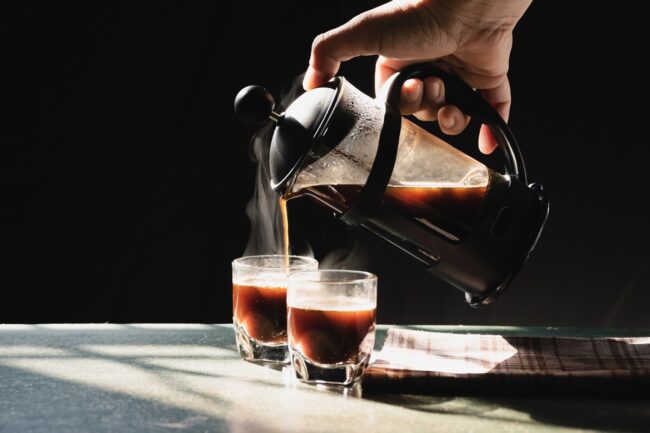
If you prefer a classic cup of Joe, and you want to go beyond the classic drip (which requires large quantities of grounds, resulting in waste) she recommends getting a French press. With that, we want a coarser grind, but if you are buying pre-ground coffee, it is always a safe bet to go with medium grind. If the grind is too fine, particulates can leak through the french press, and make your coffee “muddy.” This isn’t usually a preferred result, unless you’re a cowboy… Let the grounds and water steep for about 5-8 minutes, then press and pour!
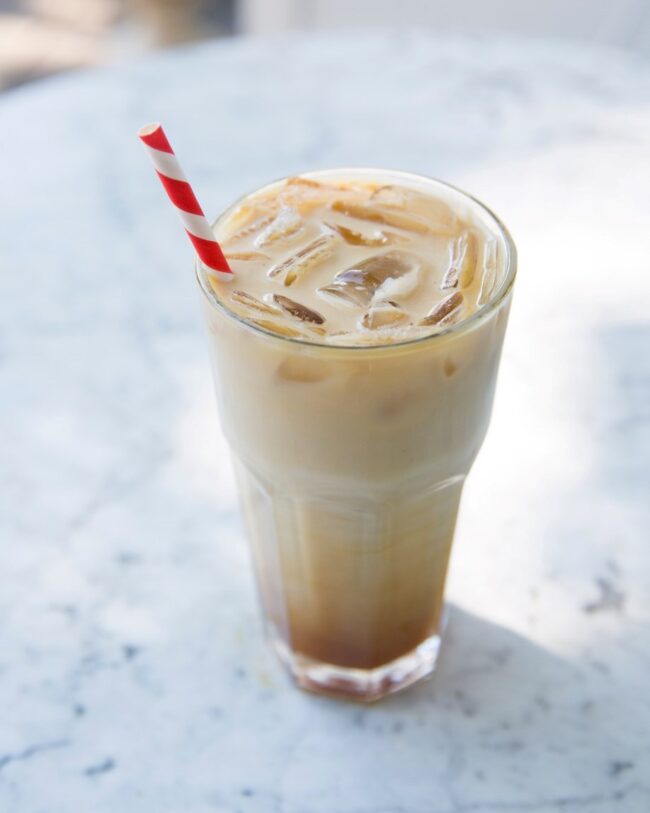
A commonly agreed upon ideal ratio to start off at is 1-2 tablespoons of coffee to every 6 ounces of water, or 1 gram of coffee per 17 grams of water, but of course, cater to your taste! One last method we will touch on is cold brew. Hoffer makes batches with ¾ cup of coffee and 4 cups of water stirred up and chilled in the refrigerator for 8-12 hours. Strain it, and it is ready to go.
Bean Selection
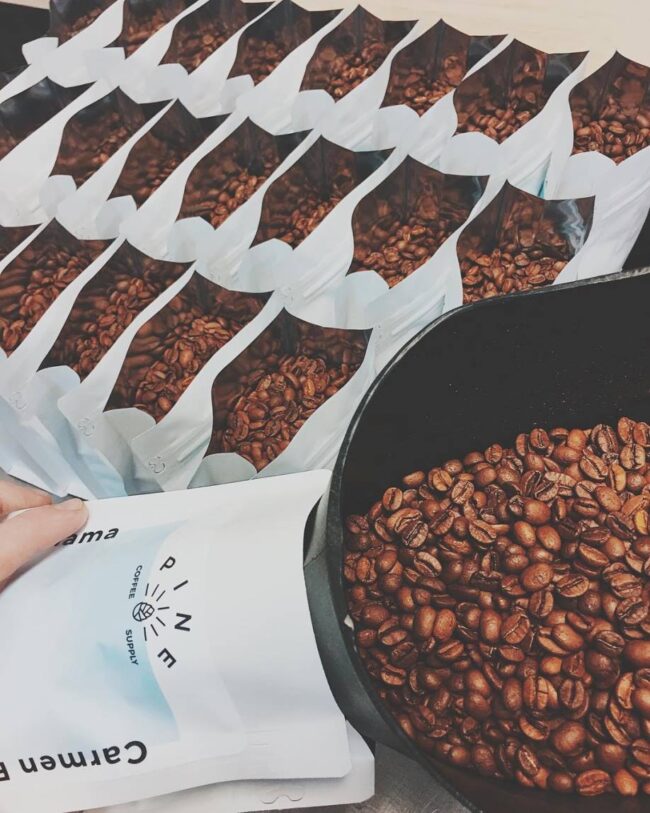
When choosing a bean, there will be many options. There are so many factors that determine the bean’s properties: climate, soil, harvest time, roast parameters and freshness. Different flavors will emerge from the bean, and how long it is roasted will greatly affect that. A light roast may present more acidity, with possible floral traits, and the caffeine level will be higher than in a dark roast. Hoffer personally favors the light roast, because more oils are preserved, and she can really enjoy the flavors in her preferred black cup of coffee. A dark roast will exhibit more of that roasty toasty feel–sometimes earthy, or even chocolatey. Persephone uses the artisanal Chicago-based Intelligentsia Coffee at the Broadway cafe, and serves Pine Coffee Supply right out of Pinedale, Wyoming at their West Bank location. Hoffer brews Doma Coffee, from Idaho, in her own home, and we suggest checking out local shops to try out beans from sustainable farms. Jackson Whole Grocer has a grand selection! The Phoenix and the Dragon recently started selling a limited edition micro roast from Dark Ritual Coffee Roasters.
Get the freshest batch you can, and use it as soon as you can. Store it sealed in its container right on the countertop, and it will bring you joy for months. Flavor starts to fade after about six months, so don’t wait too long to enjoy it. For optimal freshness, grind as needed, using a hand ceramic burr grinder or an electric blade grinder, whatever you prefer, but remember- consistency is key. Beans from all over the world present different arrays of flavors, and we leave it up to you to have fun exploring these options!
Customize Your Cup
Once you have brewed your cup of coffee, you may be feeling inclined to jazz it up and add some flavor. There are the classics: half and half, dairy milk and the plant-based milks. Consider frothing them up using your French press. Simply heat up the milk, pour it into the French press, top it with the lid, and plunge and pull the filter through the milk to make it a nice frothy foam! If you like a silky texture, why not try a spoonful of coconut cream? If you like it sweet, try your hand at flavored simple syrups! The possibilities are endless, but to start, make some syrup with equal parts sugar and hot water to dissolve. Try brown sugar for those nuttier notes (perhaps with a dash of cinnamon to spice it up), vanilla bean or extract to go that smooth route, or almond extract if you like that. We recommend making small batches, and storing it in a jar in the refrigerator for 5-7 days. A bit of honey could strike your fancy, a few drops of maple syrup, or even a couple of chocolate chips thrown right into that piping hot java to make the mocha you crave!
We encourage creativity. There are so many different beans, roasts and additional flavors you can test out to find your favorite combination to please your taste buds! Let’s have another cup!