

For her first piece as a new contributing writer for Dishing, Lanier Brooks got an inside look at Farmstead Cider’s hard cider operations happening right here in Jackson…
Making our way through February as temperatures soar above zero degrees, I can’t help but reminisce to summer: long, hot days on the river sipping rosé (all day), feeling festive. So in the midst of this arctic chill, where does one in Jackson Hole find a beverage that can be just as seasonally relevant and utterly satisfying? Cider, is the answer. Hard cider, that is. Commonly treated and often misconstrued as a fall beverage, hard cider is the perfect libation for winter. In fact, hard cider is becoming popular year-round.
Before Prohibition, hard cider was the most popular alcoholic beverage in the US. Today, undoubtedly spurred by the craft beer movement and artisanal distilling, hard cider is making a major comeback. In fact, it is the fastest-growing liquor category, faster than vodka, hard lemonade (what, why?), or even rosé.
Common cider is commonly made from crab apples, so naturally we expect to see its revival in places where crab apples grow. Proliferation seems obvious in places like the East Coast, the Pacific Northwest and California. Still, “cider apples” aren’t the only apples that can produce hard cider. There are 100 apple variations grown in North America, all of which can be used to make the delicious beverage, which means hard cider can be crafted anywhere…even right here in Wyoming. In fact, Wyoming apples make pretty good cider. Great cider, actually.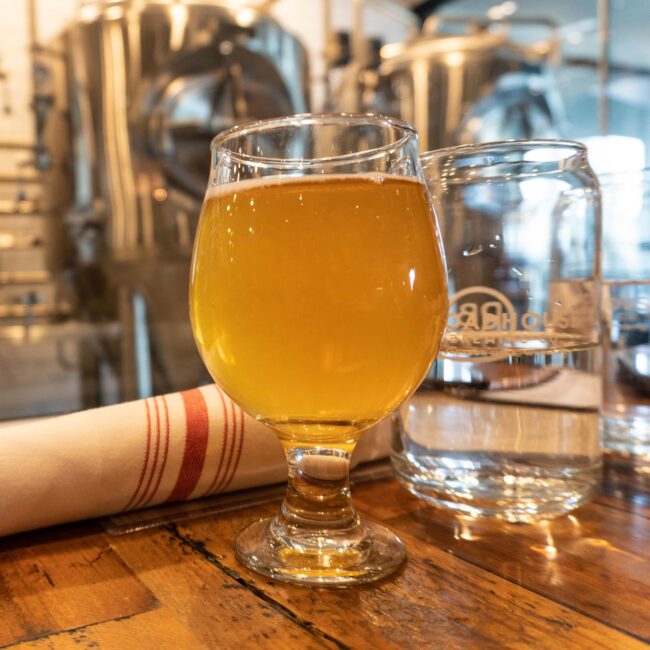
Farmstead is a heritage craft hard cider brewery, with all their ciders made by hand in Jackson Hole from apples harvested in our area. Their most popular “brew” is a dry hard cider, the brain child of Jackson Hole locals Ian McGregor and Orion Bellorado. Founders McGregor and Bellorado started this whole process by working with the Conservation District, picking apples to reduce wildlife and human conflict, specifically where bears and other animals conflicts were present. “The problem with sourcing our apples from these specific areas was, as we picked the apples, those animals just went to other neighborhoods” says McGregor. Farmstead’s unique solution to this migration? Harvest Helper.
Harvest Helper is a mapping tool for all of the apple trees located in Teton County and a link to Harvest Helper can be found on their website. The rough coordinates of the trees are made public and you can see where trees are located that property owners have given Farmstead (as well as all members of our community through Farmstead’s site permission) to pick and harvest. (Get more info, here). “You just pull up the map, look at all the trees and the notes on each tree that grant permission for picking along with instructions, including times the property owners will allow you on their land,” says Bellorado.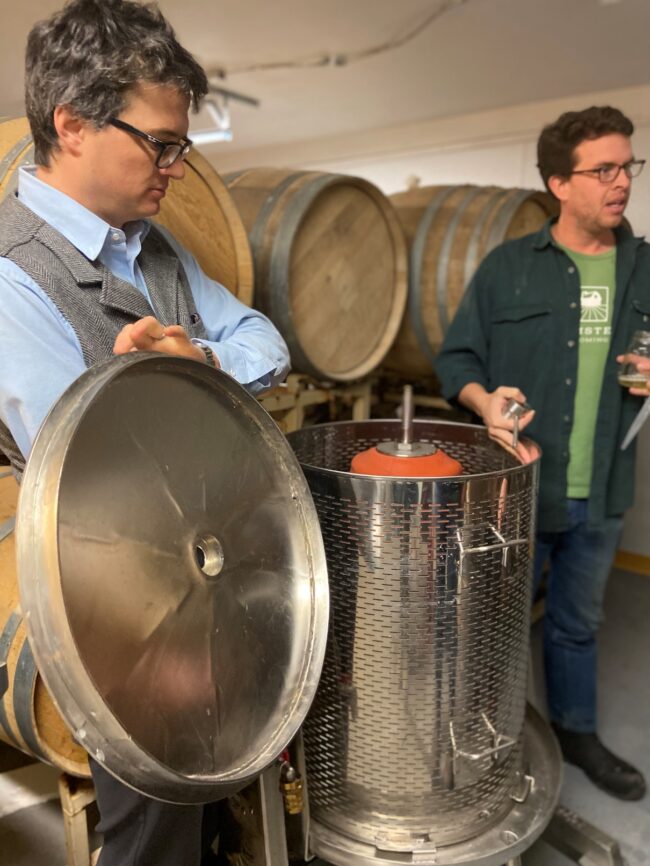
After the apples are harvested, ideally you are supposed to “sweat them” for a period of time. “Sweating is the storage process after harvesting the apple where we let them sit to allow for the pectine enzymes to break down,” Bellorado says. Pectin is a naturally occurring substance that is found in the cell walls of many fruits, including apples. Pectin enzymes are not a particle that can be settled out with aging, as they are actually bonded to the fruit. They encourage suspended solids to clump together and precipitate out of the solution, which is a key step prior to the actual fermentation process. Due to cold Wyoming temperatures and because Farmstead doesn’t have a giant sweating station, they store the apples in their cider house where the craft is carried out.
Sweating is not mandatory in the process of cider making, but it releases some of the water content and increases the sugar levels in the apples, which can intensify their flavors. Once McGregor and Bellorado determine that the sweat sesh is complete, the apples are pressed, releasing their juice. To turn the apple juice into cider, you then add yeast, kicking off the fermentation process. The amount of sugar in the cider is determined by the length of fermentation. The sweeter the hard cider, the lower its alcohol content will be. Dryer hard ciders are lower in sugar but have higher alcohol content.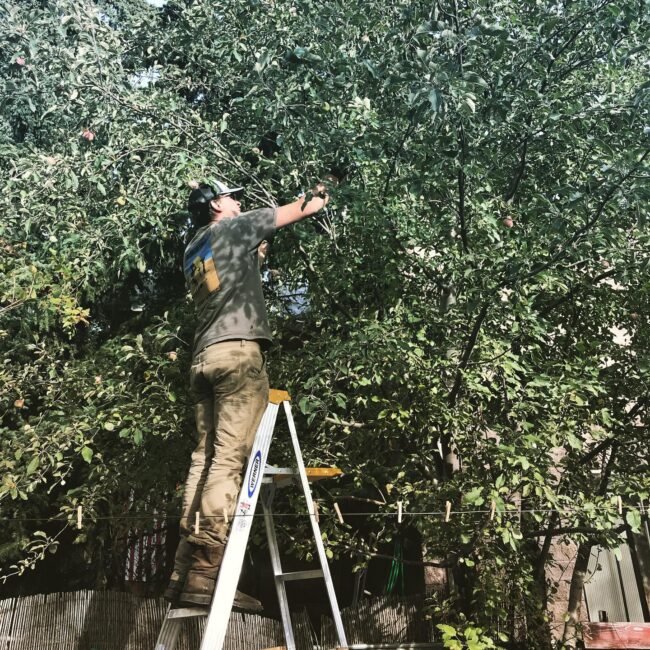
McGregor and Bellorado have embarked on an adventure in that they are producing ciders from locally sourced apples that vary wildly from style to style during a time where global cider production generally has never been more fascinating. Farmstead’s cider ranges from dry to sour, sweet to tangy and everything in between. They are bringing the cider movement to our little western town and it’s catching on, and for good reason.
The business is growing quicker than the young entrepreneurs expected, or perhaps wanted. “We want slow growth and we have a long-term plan which is based on demand,” McGregor tells us. Farmstead’s website proclaims: “We are sold out.” Do not fret, there are several local spots ready to quench your thirst for Farmstead’s cider — check out The Bird, Eleanor’s, Snake River Brewing, Jackson Drug and Roadhouse Pub & Eatery. You can also go directly to the source if you prefer; Farmstead takes reservations for tasting and hosts private events in their uniquely-local barrel rooms. Combining tech and taste, each barrel bears the surname of the property owner who, through Harvest Helper, invited Farmstead onto their land for apples. How ‘bout them apples?